



For decades, the Uru Uru Lake in Oruro, Bolivia, has sat contaminated by years of mining pollution. Drawing fromancestral knowledge, an Aspire Leaders Program (ALP) alum from Aymara Indigenous descent works to restore the lake and tackle other pressing issues in their communities.
Our Aspire Institute team had the privilege of meeting Gustavo Blanco ALP ’23 during his visit to Boston this past May.
Blanco, who recently graduated from Princeton University with a degree in Sociology, has returned home to Oruro, Bolivia on a one-year fellowship from Princeton to assist with restoration efforts of the polluted Uru Uru Lake. He wants to continue exploring how Indigenous knowledge can offer sustainable, effective solutions to today’s environmental challenges. He has also been an advocate of ALP, sharing information with those equally passionate about being changemakers within their communities.
A Tradition of Leadership
Blanco hails from a long line of leaders. Stepping up to serve the community is something the Aymara people highly value.
“In Indigenous communities, service is a big principle,” he said. “All of the leadership roles are happening without compensation at all. Sometimes a family has to provide that leadership role for the community, and they don’t do it [for money].”
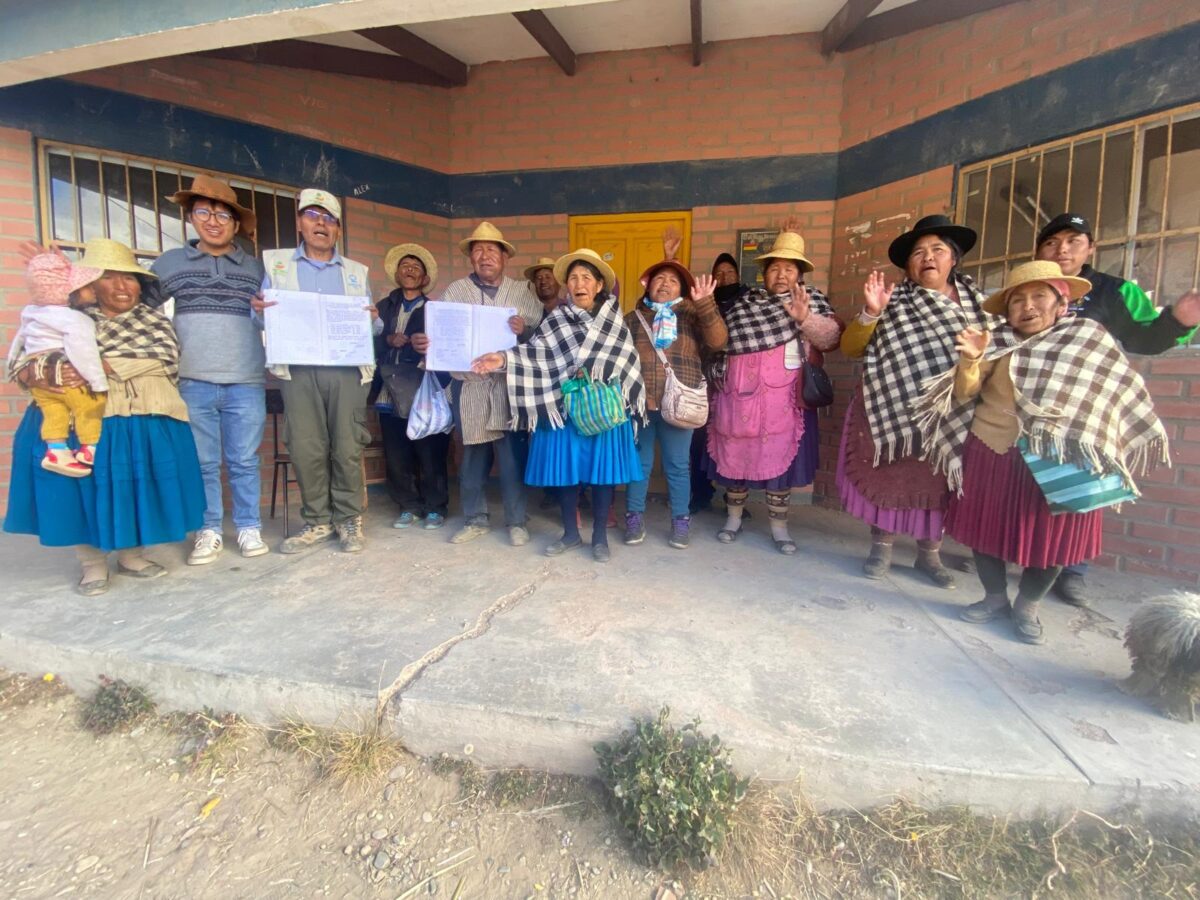
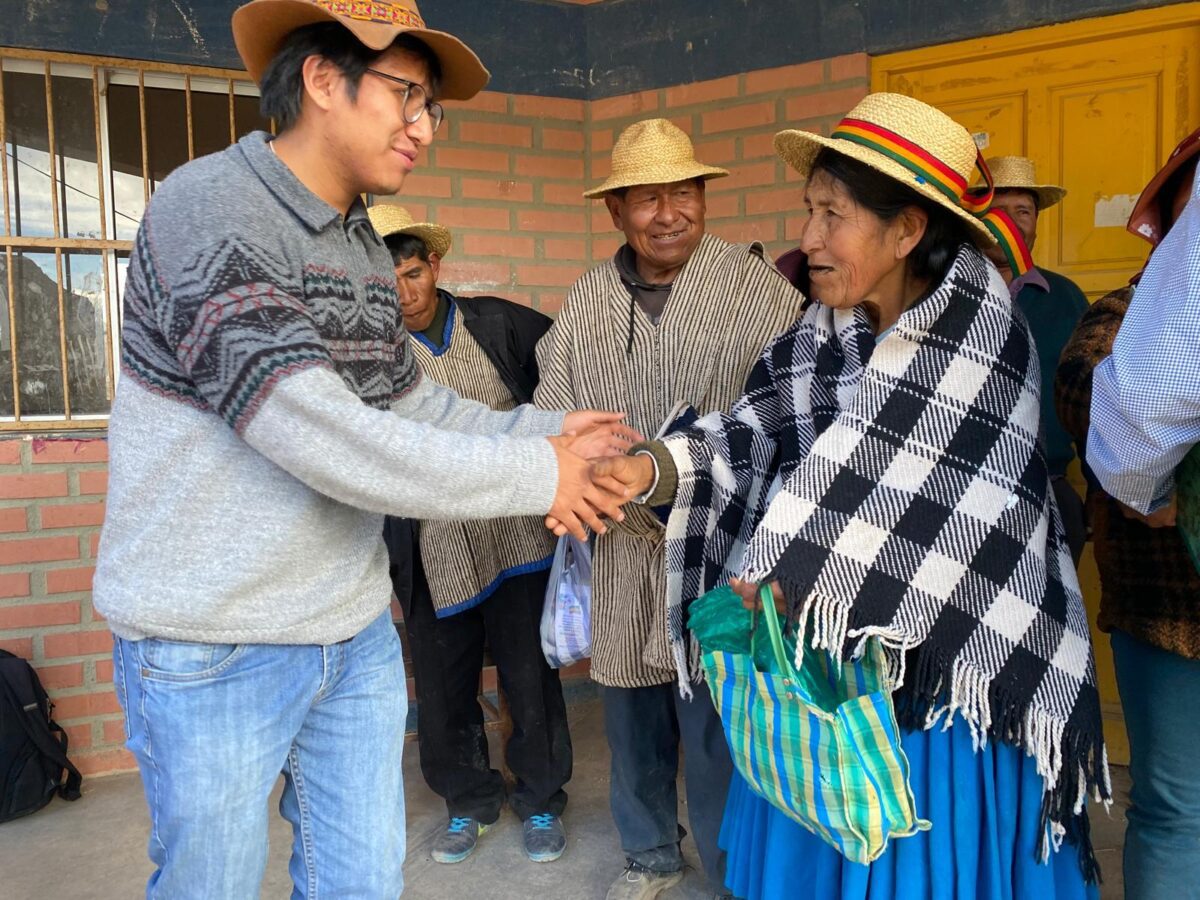
Blanco’s upbringing and heritage have been instrumental in the formation of his values and goals. He leads initiatives like the Team Uru-Uru project, working toward a future where local resources aid the development of Bolivia without harming the Earth or Indigenous communities.
“That’s been a topic that impassions me and [that] I’m still exploring — trying to promote solutions from community-rooted initiatives,” he said. “That’s been my great journey since before college with the Uru Uru Team which is a youth Indigenous-led environmental restoration project.”
These goals solidified Blanco’s decision on where to attend university. He received a scholarship to Princeton University, where the school’s informal motto is “In the Nation’s Service and the Service of Humanity” — the latter perfectly aligned with Blanco’s own values.
Opportunities at a Service-Forward Institution
Many Bolivians pursue higher education abroad; but, Blanco shared about an Indigenous principle that calls youth to return home to serve their communities. They carry the responsibility of learning all they can abroad, and coming back to share their knowledge. Since his first year, Blanco received funding from his university to travel home for service trips and fulfill this responsibility.
Blanco focused his undergraduate research on the relationship between Indigenous communities and the environment in Bolivia. He equipped himself with the knowledge and insight needed to create meaningful change in his community after graduation.
“Something important that we need to do as people that are given opportunities to go to these big institutions is take advantage of every resource — to flow it back to our communities that are sometimes disadvantaged or that [don’t] even have those resources,” he said. “[We can’t] forget where we come from. The identity that we hold is an important aspect of why we go to these places, and we have to act in reciprocity of that.”
Though he visualized his future, Blanco encountered some difficulties as a first-generation university student during his first few years. The academic material and slight language barrier initially felt frustrating, but finding a community of like-minded individuals helped.
“I think Princeton has a very strong community of [underrepresented] students that are well supported,” he said. “Having that community is something I’m very grateful [for].”
Blanco heard about the Aspire Leaders Program during his second year. The opportunity to join a global community and learn about social entrepreneurship from world-class educators drove him to apply.
Expanding His Network
Blanco appreciated the accessibility of the Aspire Leaders Program for international students around the globe.
“Just having the opportunity to be able to have those classes is something that we’re not even always granted, because education [can be] so private,” he said. “And I wanted to have the opportunity.”
In the program, Blanco met individuals from around the world. They were equally open to new opportunities and eager to create positive change. He paid close attention when they shared their actions to improve their homes and the lives of those around them.
“I could see how motivated they were [about] the work they are doing and how motivated they [were] to share that,” he said. “It’s something that I personally identify with, and [I was] very happy to hear other people do that as well.”
Blanco inspires others to take part in the program. He collaborates with Aspire to share the opportunity with those interested in learning from world-class educators and forming a community of like-minded peers.
“When you’re surrounded by those people inspired and passionate about service, you also are motivated, and that keeps you on a path that stays true to yourself,” he said.
Ancestral Knowledge and Modern Solutions
Now a university graduate, Blanco leads local Indigenous youth in the Team Uru-Uru project. They are planting plantations of Totora, a native plant that can filter water and rid it of waste. Their team plants them within channels connected to the Uru Uru Lake to reduce the amount of mining pollution entering. These efforts have resulted in a 30% decontamination rate, and they hope to keep the momentum going.
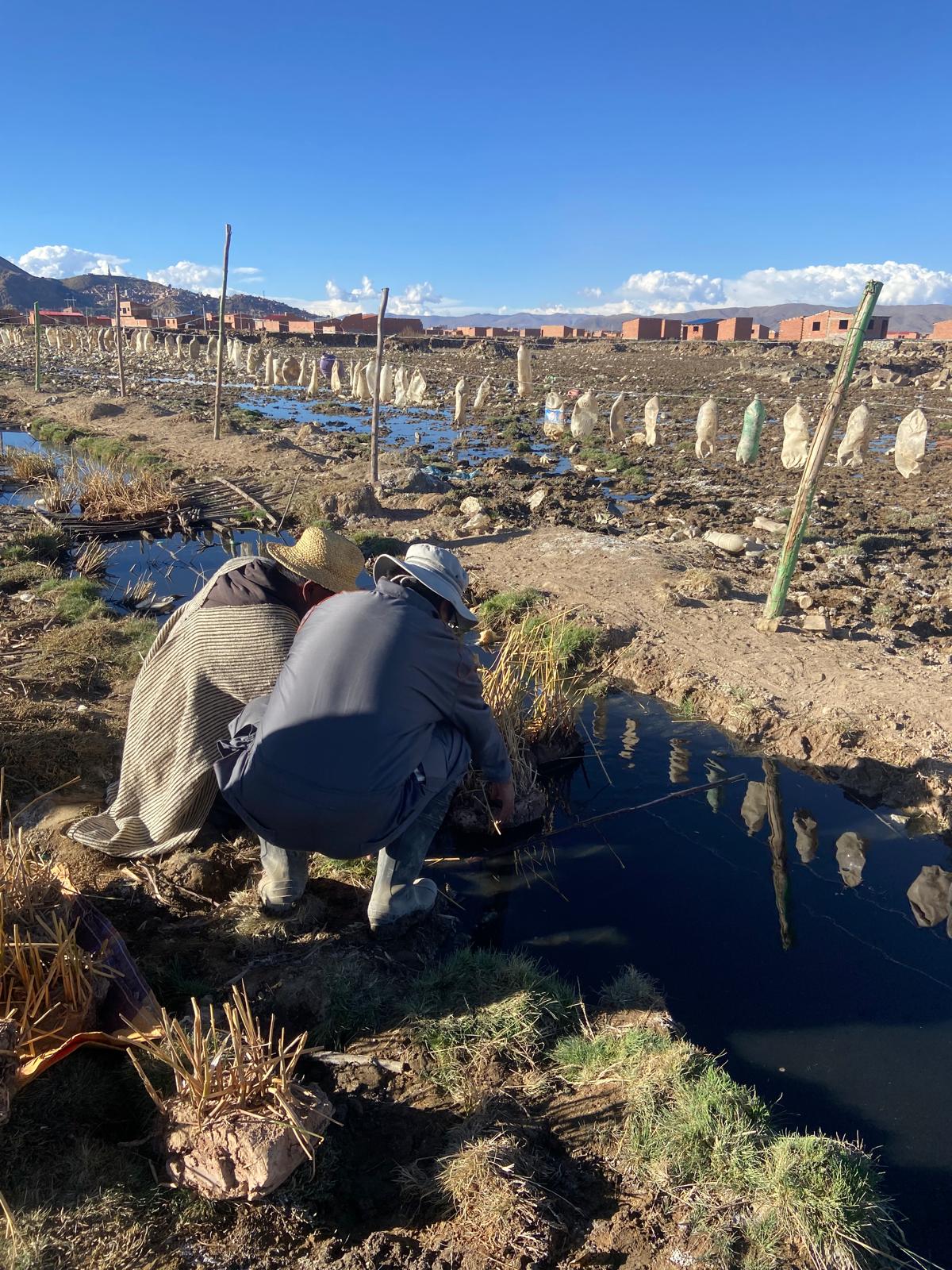
“[It’s] our main proof that Indigenous knowledge and local community action — without the need of adopting tech from other parts of the world — can also be effective,” he said. “Action that is locally driven can also have bigger, more sustainable impacts to the future.”
Blanco also helps another local Indigenous community by managing funds from a documentary he helped make possible. When his friend Michael wanted to center his thesis on climate change in Latin America, Blanco used his local network to connect him with the Uru-Murato people. While in Bolivia, Michael and his team created the Qotzuñi movie, a documentary highlighting the struggles born from the disappearance of the vital Lake Poopó. It highlights the impact of climate change and water diversion for mining on the community. Marcelo Claure invited Blanco and the production team to the Bolivia360 Day event to share local perspectives on the issue.
Blanco makes sure the profits from the Quotzuñi movie, now nominated for an Oscar award, support community initiatives. Currently, these funds provide resources to individuals to reactive the community economically.
Blanco works toward a future where the next generation realizes the importance of his work and continue it moving forward. There are many ways to achieve huge sustainable solutions with locally driven action, and Blanco is proof.