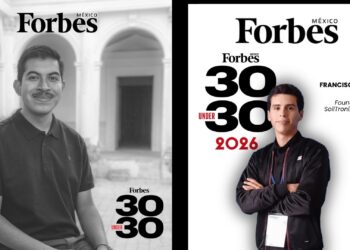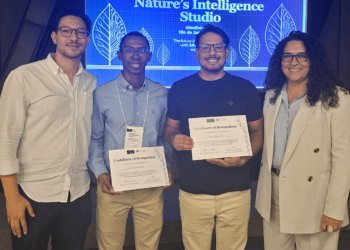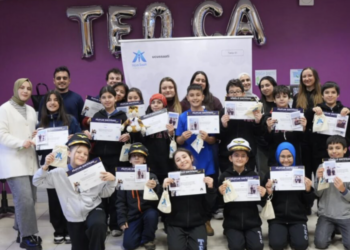




The future of climate action is being shaped by Aspire alumni—and it’s happening right now at Stanford Doerr School of Sustainability’s Global Sustainability Challenge (GSC). We’re thrilled to celebrate eight exceptional Aspire alumni representing seven innovative projects that have been shortlisted as regional finalists in this prestigious competition.
The Global Sustainability Challenge (GSC) is a prestigious competition hosted by the Stanford Doerr School of Sustainability that brings together young innovators worldwide to tackle pressing environmental challenges. Outstanding teams will win a cash prize of up $35,000, opportunities to showcase their solution globally, and receive access to the Stanford EcoGlobal Program.
This year’s GSC focuses on Sustainable Energy (advancing clean, accessible energy systems) and Adaptation & Resilience (building community capacity to withstand climate impacts). The competition spans four regional finals before converging at a Global Finale, where finalists refine their prototypes with expert mentors and compete to bring their solutions to scale.
EDCation Climate Lab | Indonesia – Bringing Climate Literacy to Rural Communities

Finalist: Halimatussaadiyah (ALP ’24)
Theme: Adaptation & Resilience
In rural Indonesia, children lack the climate knowledge needed to adapt to floods, extreme heat, and water scarcity. Halimatussaadiyah is changing that with EDCation Climate Lab—a mobile, community-based program that brings practical climate literacy to underserved villages through interactive learning kits, teacher training, and weekend workshops.
SolarLink | Nigeria, India, Brazil – Shared Solar Energy for Small Businesses
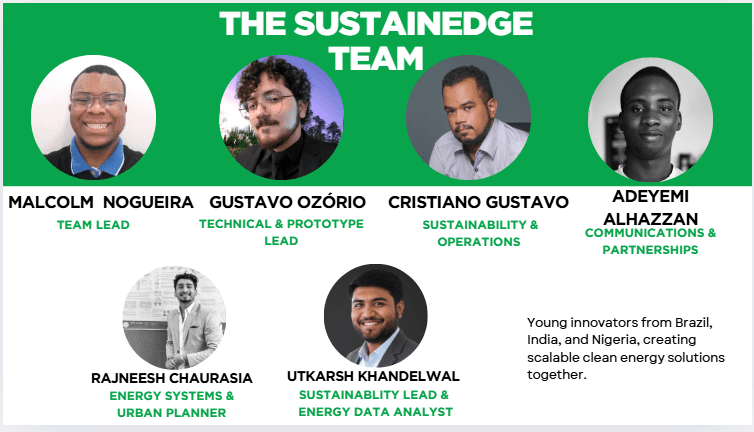
Finalist: Adeyemi Alhazzan Peter (Nigeria)
Team Members: Malcolm Nogueira, Gustavo Ozório, Cristiano Gustavo, Rajneesh Chaurasia, Utkarsh Khandelwal
Theme: Sustainable Energy
Small businesses in underserved communities across Nigeria, India, and Brazil lack access to affordable, reliable electricity. SolarLink addresses this challenge with shared solar microgrids, which cluster businesses into groups that share clean energy infrastructure and split costs through a mobile app that displays real-time pricing, availability, and usage patterns.
Flood Watch | Kenya – Community-Driven AI Flood Monitoring & Early Warning

Finalist: Michael Randa (Kenya)
Team Members: Valentine Sabulkong (Software Engineer), Roda Muthoni (Creative Design Lead)
Theme: Adaptation & Resilience
Floods kill thousands yearly, yet warning systems often fail to reach vulnerable communities in time. Flood Watch transforms every smartphone into a flood sensor—citizens report flooding via WhatsApp/Telegram with photos and location data, AI verifies reports within minutes by analyzing images and weather data, then geofenced alerts are sent to affected communities with evacuation guidance.
PakFloodResilient | Pakistan – Community-Centered Flood Forecasting

Finalists: Hamza Abbasi (Pakistan)
Team Members: Zoya Ahmed, Sana Jamal, Noor Amir, Abdullah, Muhammad Hassan Naveed
Theme: Adaptation & Resilience
Pakistan’s existing flood warning systems fail to reach rural and low-income communities in time. PakFloodResilient combines satellite rainfall data, hydrological models, and machine learning to deliver accurate, localized flood forecasts at the union-council level, disseminating alerts through automated voice calls, SMS/WhatsApp, mosque loudspeakers, and village flag systems to ensure accessibility for low-literacy populations.
Context-Aware Synthetic Data Generation for Climate-Smart Agriculture | Pakistan – Bridging the AI Gap for Smallholder Farmers

Finalists: Fathima Raihaan Ihsan (Pakistan)
Team Members: Sara Razeen, Fathima Hafsa Faizer, Maryam Ashraff, Kashif Abdullah
Theme: Adaptation & Resilience
AI agricultural tools trained on Western farm data fail Pakistani smallholder farmers, causing crop misdiagnosis and financial losses. This team uses Continuous Conditional GAN (ccGAN) to generate synthetic crop images conditioned on Pakistan-specific environmental variables—soil type, temperature, humidity, seasonal patterns—creating an open-source dataset that enables accurate, locally relevant crop diagnoses and recommendations.
Ripples of Hope | Pakistan – Self-Sustaining Water Purification for Communities

Finalists: Aisha Hanif (Pakistan)
Team Member: Fareeda Noor
Theme: Adaptation & Resilience
Freshwater scarcity threatens billions globally. Ripples of Hope is a self-sustaining water purification system that combines biological treatment using hydrogel-based organisms, smart biosensors, and multi-stage filtration (sand, carbon, UV). Energy from bioelectric activity and a hydroelectric turbine powers the entire system, producing clean water for drinking, agriculture, and community use with minimal external energy.
Play It Safe Against Disasters | Pakistan, India –Gamifying Disaster Preparedness Education

Finalists: Sahil Kumar (Pakistan), Ahsan Shams (India)
Team Members: Maria Jilka (Team Lead, Aspire Cohort 5), Bate Guyo (Aspire Cohort 5), Bhumi Gagnani, Jaimie Ong
Theme: Adaptation & Resilience
Climate disasters are increasing, yet populations most at risk often lack disaster preparedness education—especially in low-literacy communities. Play It Safe uses gamification to help communities create their own localized disaster preparedness plans together, turning learning into a collaborative, hands-on experience that centers community knowledge and local stakeholders, backed by expert guidance.
These seven projects—representing eight Aspire alumni innovators—demonstrate the breadth and depth of innovation happening within the Aspire community. As they advance to Phase 2 of the Global Sustainability Challenge, they’ll refine their prototypes, engage with Stanford mentors and industry experts, and work toward bringing their solutions to communities that need them most.