



Maryam Siddique, a passionate alumna of the 2025 Aspire Leaders Program from rural Punjab, Pakistan, is turning her own health struggles from junk and packaged foods into a bold mission: making everyday meals healthier for families across her country. Inspired by her food science and technology studies, and supported by Aspire’s Seed Fund grant, Maryam founded O’Pasta. This innovative venture is designed to deliver better nutrition without sacrificing taste, while showcasing that women from rural communities can lead lasting change in Pakistan’s food industry.
Balancing Pride and Pressure
Maryam was the first in her family to attend college, and she celebrated that milestone with pride. This achievement, however, also carried the weight of expectations: younger girls in her family and community watched her closely, looking to her path for inspiration.
“I was the first in my family to attend college,” she said. “Every girl was taking motivation from me, and I think it put an extra responsibility on my shoulder that I have to do something.”
That pressure wasn’t just academic, it was personal. In a community that placed great value on sons, Maryam, as an only child, felt she had to prove time and again that daughters can lead, build, and succeed.
“I have no brother. I felt a burden on myself that I have to do something — I have to prove that daughters are also great,” she said. “That’s why I started my startup in my university life. I wanted to do something bigger for my father and for other girls.”
Forging Purpose from Health Struggles
Growing up, Maryam’s family was deeply health conscious, and packaged foods were rare in her home.
“Food Science and Technology was like my childhood dream come true because I belong to a family which is very health conscious, and we never eat packet food,” she recalled.
I always dreamed that if I created a food company, I would change all food industries. So, I [aim to] make every packaged food healthy so I can eat freely.
These habits changed when she began college. New independence gave way to late nights and access to processed food — a lifestyle that soon caught up with her.
Maryam developed severe digestive issues that led to inflammation of her large intestine. Friends around her were also struggling with gut health, hormonal imbalances, and weight gain. It became impossible to ignore the link between everyday “normal” food choices and long-term health consequences.
With this in mind, Maryam drew on her studies in food science and technology to connect her personal experiences with national opportunity. She studied all manner of packaged foods available in Pakistan and noticed one category gaining popularity fast: pasta.
Pasta’s convenience was turning it into a household staple, and for Maryam, this growing demand wasn’t just a market trend — it was a chance to introduce a healthier alternative to a product people already loved.
“I always dreamed that if I created a food company, I would change all food industries. So, I [aim to] make every packaged food healthy so I can eat freely,” she said.
Maryam eventually pitched her idea to one of her professors. The professor, who was amazed by the product’s potential, became Maryam’s first supporter in bringing O’Pasta to life, offering invaluable guidance on nutrition, product chemistry, and ingredient options.
“She said, ‘I never consult students personally, but I see your passion,’” Maryam recalled. “‘You have something in you. That’s why I’m giving my time to you.’”
Creating O’Pasta within a Difficult System
Maryam believed pasta could be reimagined as a healthier staple, one that families could easily adopt at home while supporting local agriculture. However, turning that vision into reality was far from straightforward. Traditional pasta requires durum wheat, a crop that is not widely grown in Pakistan. Without access to the necessary raw material, Maryam found herself unable to produce the kind of nutritious pasta she had envisioned.
She began heavily researching alternative grains that were both locally available and nutritionally superior. Semolina was a promising solution, capable of delivering better flavor, higher protein content, and improved nutritional value compared to the refined flour commonly used in packaged pasta products across the country.
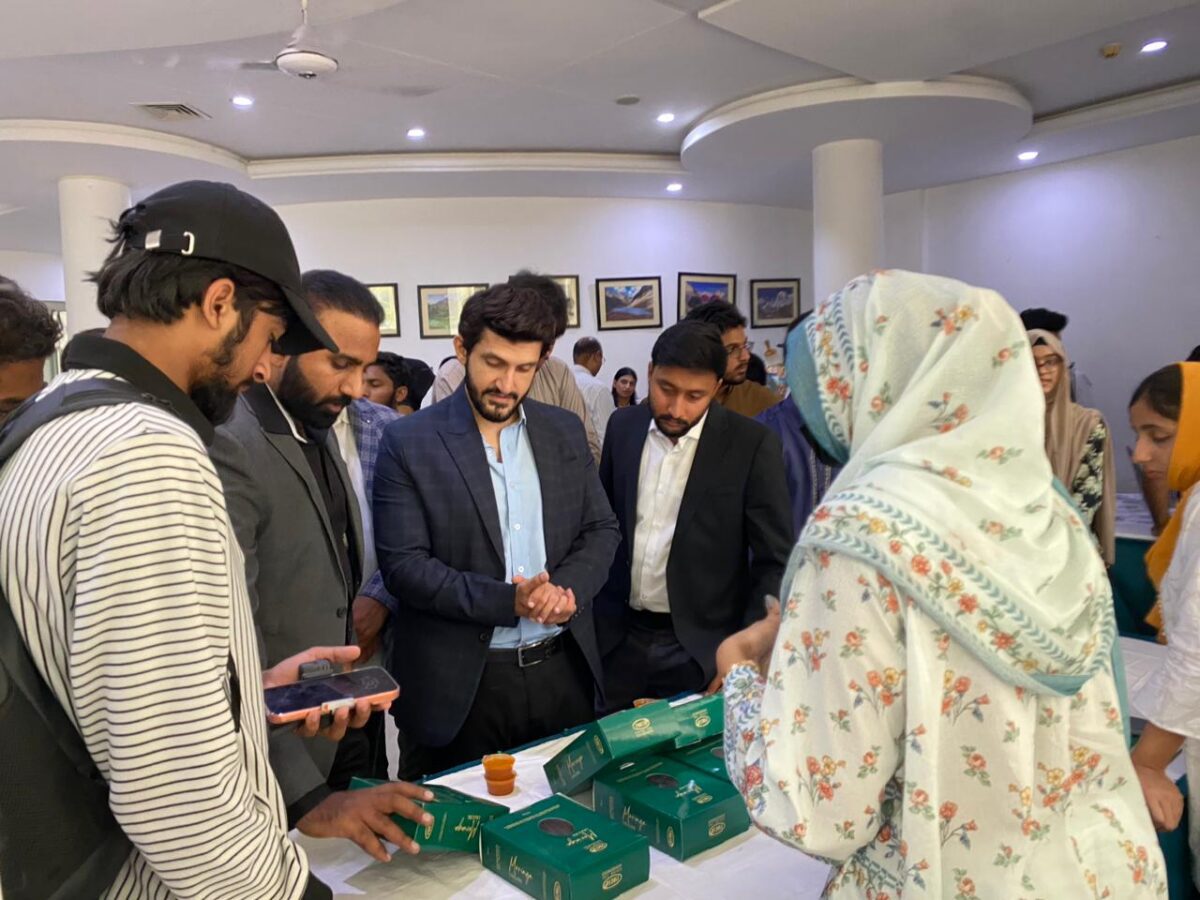
Maryam also incorporated moringa, a bitter and nutrient-dense plant known for its high iron content, to combat widespread iron-deficiency. She spent an additional six months refining the formulation, working to eliminate bitterness without compromising nutritional value.
All of this work unfolded alongside another set of challenges. Starting a business in Pakistan was already difficult, but starting one as a young woman from a rural village, without a brother to accompany her into markets or negotiate with vendors, was even harder. Maryam was often dismissed outright, with doors literally closing in her face as she searched for suppliers, printers, and packaging support.
“It was a challenge for me to be a girl in Pakistan because there is no girl coming into business from our village,” she said.
Despite these barriers, Maryam carried on — anchored by her father’s unwavering support and her belief that O’Pasta was never just about her. It was about her community, her country, and proving that meaningful innovation can come from places — and people — often overlooked.
Throughout this intensive R&D period, while investing her time, resources, and energy, Maryam continued building her leadership skills by applying to and participating in the Aspire Leaders Program, laying the groundwork for O’Pasta’s next stage of growth.
From Vision to Momentum
Maryam joined the Aspire Leaders Program with two goals: to learn more about leadership and strengthen her English to communicate more confidently in business settings.
“I saw that I had the chance to connect with international students who speak English,” she said. “I joined Aspire with this intention: when I communicate with them, my English will improve, so I can communicate well with business people in Pakistan and with international people.”

As her journey went on, though, Aspire became much more than that. While finishing her degree and developing O’Pasta, Maryam hit a financial wall. Funding was low and marketing her product wasn’t possible. Her packaging was criticized by funders, and she faced repeated rejection from investors who didn’t believe the brand was ready.
Maryam applied to Aspire’s Seed Fund grant, and once her proposal was accepted, it became the turning point that helped her upgrade packaging, improve branding, and give O’Pasta the professional shape it needed to be taken seriously.
With a more refined product and stronger confidence as a founder, Maryam began engaging directly with key regulatory and government stakeholders. She recently met with the Pakistan Food Authority to discuss licensing for O’Pasta. Following that meeting, she was invited to present her pasta line to the Chief Minister of Punjab, Maryam Nawaz. Although the Chief Minister was unable to attend in person, her representative participated in the presentation and expressed strong interest — leaving highly impressed by both Maryam’s idea and the quality of her product.
At the same time, Maryam earned another major win: she applied to the National Incubation Center Faisalabad, one of Pakistan’s most competitive startup incubators. Out of hundreds of applicants, she was selected among the top startups, gaining access to business leaders, mentorship, and networks that further strengthened her communication, leadership, and entrepreneurial growth.
The Future of O’Pasta

Maryam is currently selling her product primarily in Faisalabad, but her vision for O’Pasta is national, and then global. She sees O’Pasta expanding into Pakistan’s largest cities: Lahore, Karachi, and Islamabad, becoming a trusted household choice for families who want healthier options without sacrificing convenience or taste.
“Every family can choose it with full confidence and know that this will not harm your life. This will not harm our children,” she shared.
Maryam’s leadership philosophy is rooted in purpose, not prestige. She speaks about learning, growth, and impact as the real goals, and she encourages future leaders not to chase money first.
“It is not always about money; it should always be about learning and growing,” she said. “I got this advice from a business leader in Pakistan [who said to] never think about money, just do your part and do things for society, for other people. Money is not the thing to focus on — it should be about supporting your society, your family, and making a positive impact in other people’s lives.”