



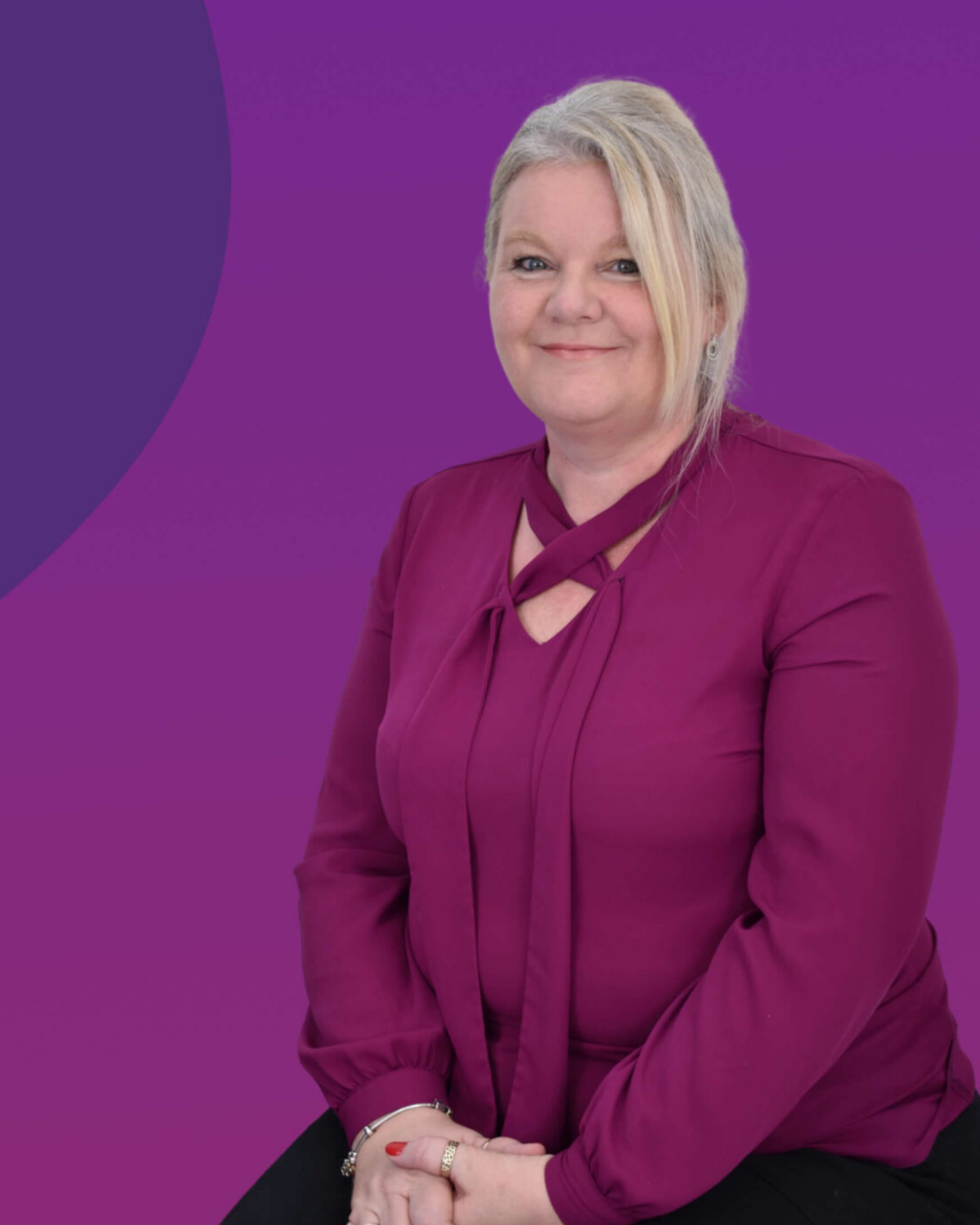
Louise Dawson is an international neurodiversity and inclusion specialist and the founder of Louise Dawson Inclusion Training — an Aspire partner — who has spent her career challenging traditional ideas about learning and success. Drawing from her unconventional academic journey and experiences as an educator, entrepreneur, and parent of neurodiverse children, she brought a deeply personal perspective to her recent Masterclass for Aspire Leaders Program participants on inclusive education.
Her story reminded learners that success is not defined by how quickly someone reaches a destination, but by their willingness to keep learning, adapting, and paying it forward.
Growing Up Without a Roadmap
Dawson’s early life looked very different from the one she lives today. Raised in a small village in Norfolk, England, she grew up in a family where higher education was neither discussed nor expected. School was not a place where she felt particularly successful, and she often struggled to find her place socially.
“My parents didn’t go to university; neither of them had any qualifications whatsoever,” she said. “I was a small-town country girl, and the expectation was that I would stay in the same village, get married, have children, and be a good housewife.”
Although she left school at fifteen, Dawson continuously sought out ways to develop practical skills that she knew would serve her throughout her life. She found work in her school’s administrative office and learned how to prioritize, communicate, and type professionally.
Looking back, Dawson does not view those early years of work as a setback, but rather, as the beginning of a journey that unfolded on its own timeline.
Exploring Opportunities and Building a Career
Without a university degree, Dawson entered the workforce as a typist and gradually worked her way through a variety of roles. Her position in administrative support eventually evolved into office management, recruitment, and later, international opportunities that took her far beyond the village where she had grown up. This willingness to embrace new experiences became one of the defining themes of her career.
“If someone said, ‘Do you want to go on this training course?’ the answer had always been yes, even if I wasn’t particularly interested, because I didn’t know what I was going to learn. I’ve always loved learning, even when I didn’t always love academia,” she said.
That mindset eventually led her to Hong Kong, where she managed operations across dozens of offices throughout the Asia-Pacific region. Each new role sharpened her leadership skills and offered an insider’s perspective on diverse industries, equipping her with a wealth of experience that would later become instrumental when she embarked on an entirely different career path.
Turning Personal Challenges into Professional Purpose
The turning point came when Dawson became a mother. When her eldest child began experiencing significant learning challenges, she discovered how difficult it was to navigate educational systems that lacked understanding and support for neurodiverse learners. She spent years searching for answers while trying to advocate for her son.
“I still didn’t have a diagnosis or any support. So I thought the only way I could help him in school was to become a learning assistant,” she said. “I needed to understand how I was going to get him through education because I didn’t have one myself.”
This realization sparked her calling. Dawson returned to school in her mid-thirties and earned a master’s degree in both education and special education. After graduation, she pursued work as a Special Educational Needs Coordinator; a role which allowed her to utilize her professional skills and degree in autism to support children and families for the next 20 years.
Though Dawson’s academic path was different from that of a traditional student, it gave her something incredibly valuable: lived experience. Her career transition also encouraged her to examine that path — and herself — from a new perspective.
“For my 50th birthday, my children handed me a card with a voucher inside and said, ‘Go and get tested, Mum.’ Even after all those years, I had never once looked inwardly at myself.”
Dawson was diagnosed with Attention-Deficit/Hyperactivity Disorder and autism (AuDHD). This revelation provided clarity for the experiences she had carried throughout her life and deepened her understanding of the families and students she supported every day.
With her nuanced perspective, Dawson knew there was more she could do to support those with additional needs and created Louise Dawson Inclusion Training. Now based in Dubai, she’s since become a consultant for schools and organizations, helping them create more inclusive environments for learners around the world where different ways of thinking are viewed as strengths rather than obstacles.
“When I walk into a classroom and a child is struggling, I often know why immediately. It might be the noise, the lighting, where they’re sitting, or something no one else has noticed,” she said. “I have a sixth sense for it because I’ve got the same brain as they do.”
What began as a mission to support children with additional needs has grown into a multifaceted organization that provides school improvement services, inclusion training, parent advocacy, employment support, and access to resources that make learning more meaningful and accessible. Guided by her belief that “it takes a village to raise a child,” Dawson works to bridge the gap between schools, families, and communities across the world so that every child has the opportunity to succeed.
Aspire Institute recently partnered with Dawson’s organization and invited her to host a Masterclass for Aspire Leaders Program participants.
A Masterclass Rooted in Inclusion and Possibility
I’m really passionate about people knowing that education is lifelong. There is no failure, there’s just a ‘not right now.’
Her account of her journey and the lessons she learned resonated deeply with participants, particularly those who had experienced challenges within traditional educational systems or questioned whether they were on the “right” path.
Dawson was especially moved by the opportunity to connect with learners from around the world who were eager to create change in their own communities. At the heart of her message was a belief that learning does not have an expiration date and that success should never be measured against someone else’s timeline.
“I’m really passionate about people knowing that education is lifelong. There is no failure, there’s just a ‘not right now.’ If you can’t do it right now, go off and do something else, learn some skills, get involved in your community, and you’ll get there when you get there,” she said.
Building a More Inclusive World
After decades of working in education, Dawson remains as passionate as ever about expanding access to inclusive learning and supporting families navigating neurodiversity. She hopes to create a lasting repository of knowledge and practical guidance that educators, families, and organizations can access whenever they need support.
“I want to be the first place that anybody goes to in the Middle East if they have a question about special needs, education, gifted and talented learners, or wellbeing. I want to brain dump all my knowledge into the website so that everyone has access to it all of the time,” she mentioned.
For Dawson, the future of her work is not simply about growing a business. It is about creating a sustainable platform that allows her knowledge, advocacy, and passion for inclusion to reach even more children, families, educators, and communities around the world.
Advice for Emerging Leaders: Follow What Makes You Come Alive
Dawson encourages emerging leaders to focus less on external expectations and more on discovering what genuinely excites and motivates them.
“Follow your passion and do what you love. If you don’t know what your passion is, go and do everything. Go horse riding, go swimming in the ocean, go and play tennis, go and try new things because your passion is out there somewhere,” she said. “If you can tick off all the things you don’t want to do, it’s easier to find what you do want to do. Just follow your heart and don’t follow money. Following money is the quickest way to being unhappy. If you’re happy, the money will come.”
Learn more about Louise Dawson and her work at https://louisedawson.com/.