



Jawad Ahmed, an Aspire Leaders Program alum and 2025 Social Impact Seed Fund awardee, is transforming the lives of vulnerable children in rural Pakistan through his education initiative. As an Aspire University Leader at Sukkur IBA University, his journey reflects a deep commitment to community-driven change. His story highlights how personal experience can shape a leadership mindset and empower others to turn a simple idea into a meaningful, scalable project that can impact hundreds.
Rooted in Purpose: A Journey Shaped by Rural Realities
Growing up in a rural area with limited access to education, Ahmed developed an early understanding of the structural challenges faced by underserved communities. These lived experiences became the foundation of his commitment to social impact.
“I come from a rural background where access to education is limited, and many families prioritize short-term survival over long-term opportunities,” he reflected.

This insight into the realities of poverty and illiteracy helped Ahmed see education not just as an opportunity, but as a necessity for breaking cycles of hardship. His exposure to these challenges instilled a sense of responsibility to contribute to meaningful change.
Building “From Begging to Learning”
Ahmed’s initiative emerged from directly observing children begging on the streets, in markets, and at shrines. Rather than accepting this as an unchangeable reality, he sought to create an alternative pathway for these children.
“The idea came from observing children aged 4 to 14 begging on streets, shrines, and markets in Sukkur,” he explained.
Through the support of the Social Impact Seed Fund, he developed a structured program that introduced pop-up learning hubs, offering a 9-week curriculum focused on literacy, life skills, and engagement through storytelling and games. The initiative also included distributing hygiene kits and providing parental counseling to address deeper social barriers.
Breaking Barriers: Challenges as a First-Generation Change-Maker
As someone navigating both systemic and cultural challenges, Ahmed faced significant resistance, particularly in shifting mindsets around education. Many families depended on income generated through begging, making it difficult to prioritize schooling.
“The main challenge was convincing families to prioritize education over immediate income from begging,” he highlighted. This challenge required persistence, empathy, and trust-building. By engaging families directly and demonstrating the long-term value of education, Ahmed gradually changed perceptions and encouraged participation.
The Aspire Effect: Leadership, Confidence, and Community Impact
Ahmed credits Aspire with playing a transformative role in his development as a leader. The program not only strengthened his mindset but also gave him the confidence to take initiative and lead change within his community. “Aspire helped me discover the leader within, not defined by titles, but by passion, resilience, and vision,” he emphasized.
In his role as an Aspire University Leader, he expanded his outreach and mobilized others, even achieving the milestone of registering the most students in the Aspire Leaders Program at his university.
Creating Lasting Change
The results of Ahmed’s initiative have been both measurable and deeply human. Over 100 children were reached, with more than 40 transitioning into formal and non-formal education. Beyond numbers, the initiative has shifted identities and community perceptions.
“Children began identifying themselves as learners rather than beggars,” he remarked.
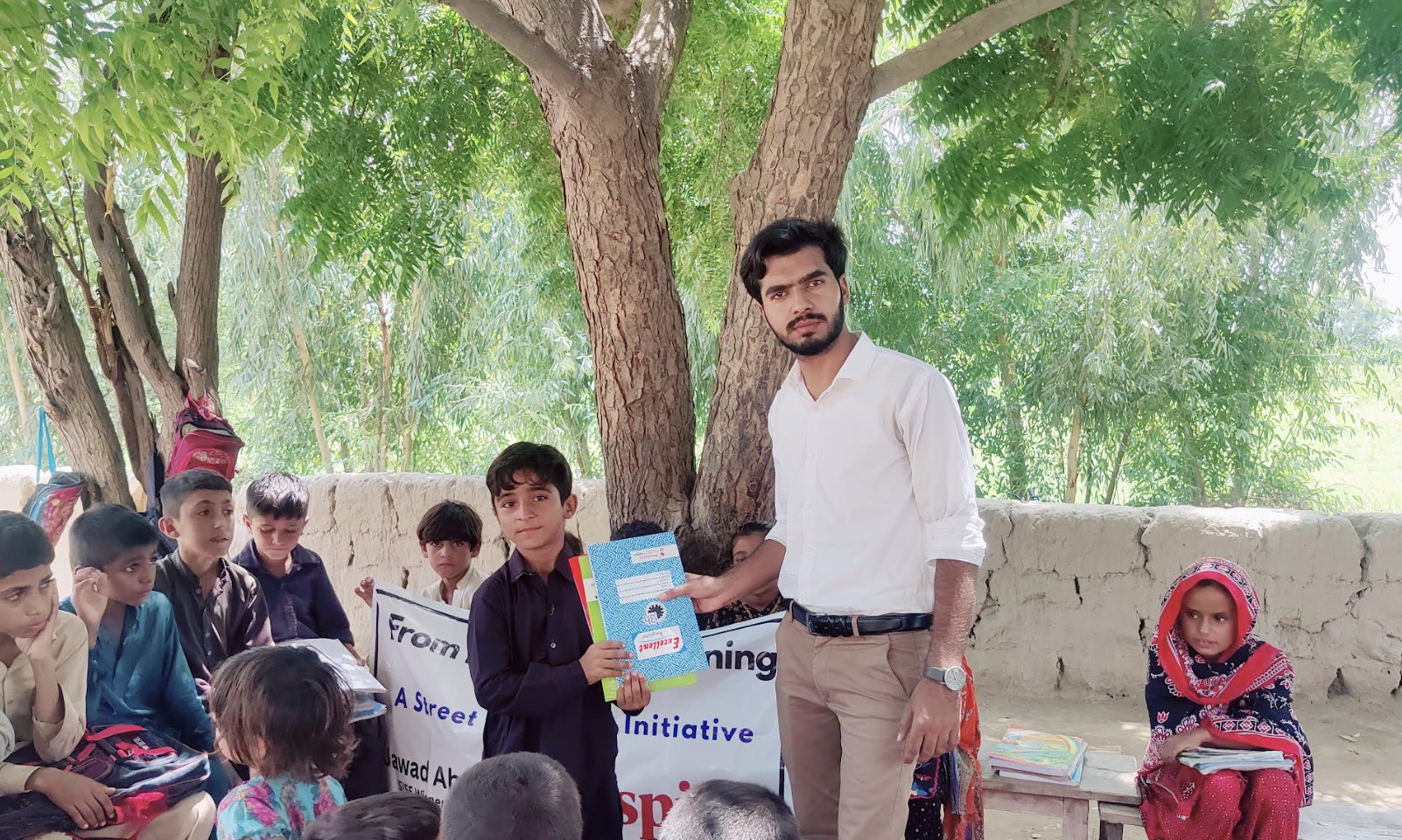
This transformation highlights the power of education not only to inform but to restore dignity and reshape futures. Communities have also shown increasing support, recognizing the long-term benefits of investing in children’s education.
Looking Ahead: Scaling Impact and Sustaining Change

Ahmed is now focused on expanding his initiative to reach more communities and refining it into a scalable model. His long-term vision is rooted in sustainable solutions for underserved populations, particularly in the education sector.
“I aim to expand this initiative to reach more communities and develop it into a scalable model,” he said.
Drawing from his journey, Ahmed encourages emerging leaders to take initiative, even in the face of uncertainty or limited resources. His advice emphasizes action, consistency, and connection to the community.
“Start with a problem you deeply understand. You don’t need perfect conditions, just take the first step. Engage with your community, stay consistent, and remain committed to creating meaningful change.”