





Each year, Forbes México‘s 30 Under 30 list recognizes young leaders, entrepreneurs, innovators, and artists under the age of 30 who are transforming their industries. These remarkable individuals have achieved notable success in their respective areas, and being named to the list is regarded as one of the most prestigious recognitions for young talent in the country.
This year, two members of the Aspire alumni community made the cut — chosen for their impactful work in the Social Impact and Sustainability category. While their projects operate in very different spaces, Angel Solís and Francisco Zuriel are both demonstrating how technology can become a tool for expanding opportunity and creating solutions rooted in the communities they serve.
Angel Solís: Sparking Ancient Wisdom for Social Change

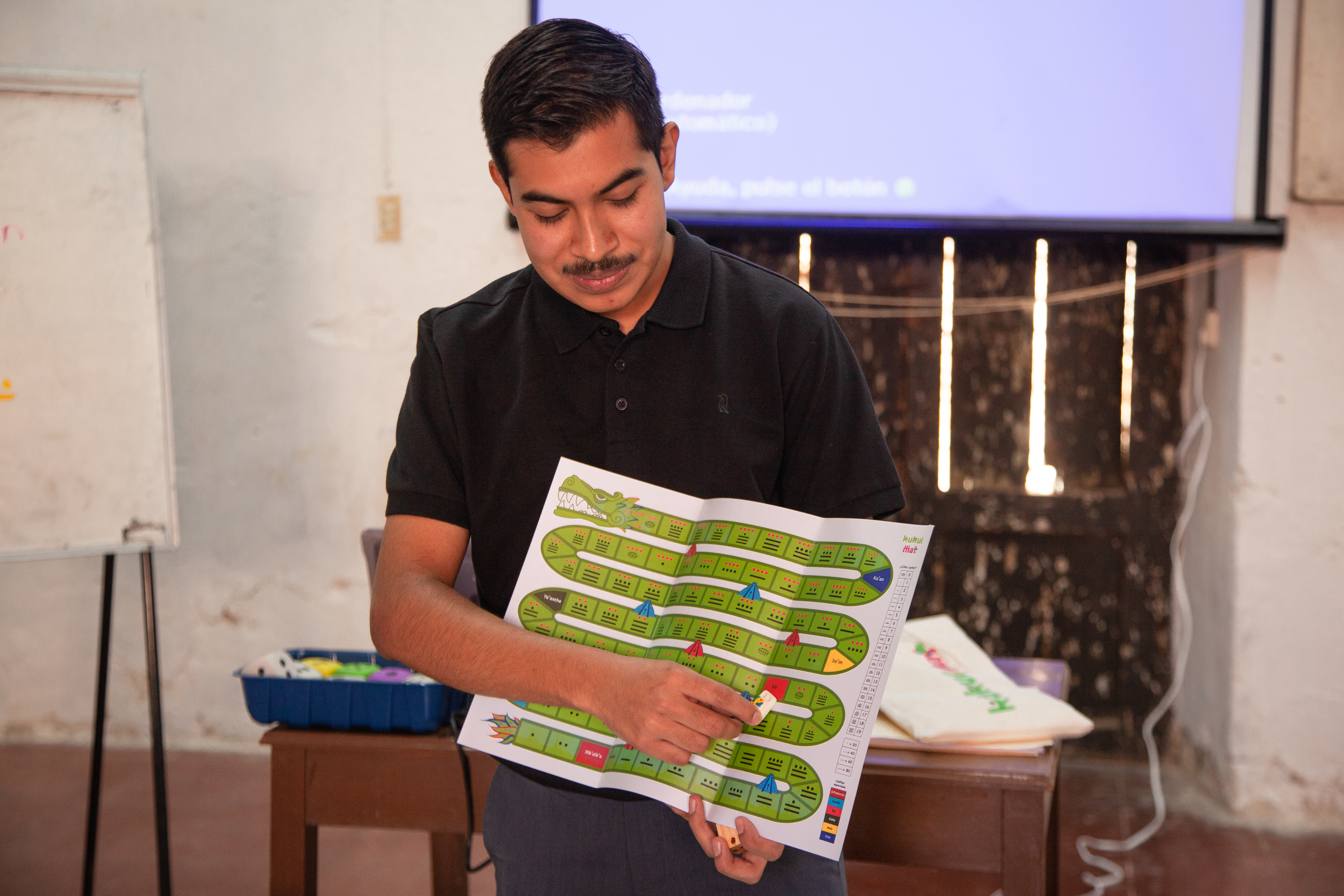
Angel Solís, a 2024 Aspire Leaders Program alumnus and Community Action Award winner, was included in Forbes México‘s 30 Under 30 list in 2026 under the Social Impact category for his work with Kukulmat, a community-rooted initiative he founded which advances a model of regenerative education and operates at the intersection of ancestral wisdom, cultural identity, community well-being, and emerging technologies.
Building Bridges Between Worlds
Kukulmat began with a simple idea: creating educational materials in Indigenous languages in Mexico. It was developed by Solís as a response to educational systems overlooking Indigenous languages and knowledge systems in favor of science and technology — areas they perceived as being disconnected from Indigenous realities.
Over time, Kukulmat became Solís’ way of building bridges between spaces too often treated as separate: ancestral knowledge and emerging technology, cultural identity and STEM, local communities and global ecosystems of education and innovation.
Measuring Impact Beyond the Numbers
With help from Aspire Institute’s Community Action Award, Solís and his team implemented three core initiatives within Kukulmat: the Cultural Ambassador Program, STEM Labs in Indigenous Communities, and an AI Language Preservation Lab. They also worked to strengthen the Kukulmat Cultural Center as a living hub for learning, experimentation, and community leadership.
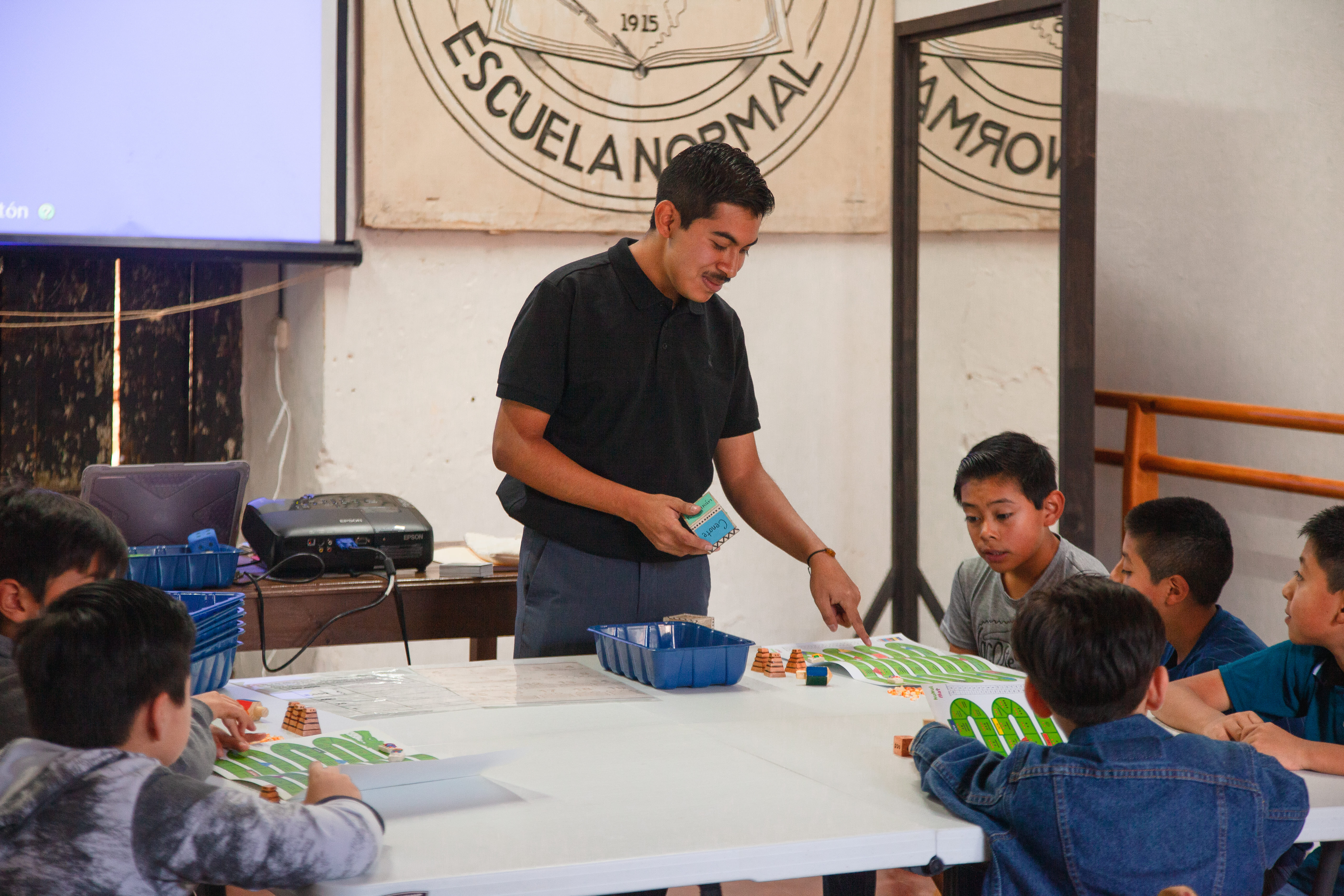
Through Kukulmat’s community activation efforts, leadership trainings, and education initiatives, Solís and his team have reached close to 3,000 people across more than 11 communities and three states in Mexico, distributed more than 2,000 educational tools, trained 15 cultural ambassadors, and established a community cultural center in Chiapas.
The moments that stand out most to him, though, go beyond the numbers. Through Exploradores del Pasado, Kukulmat’s culturally rooted robotics initiative in Chiapas, more than 55 Indigenous children participated in STEM experiences; five of whom went on to represent their community at the national First LEGO League competition in Monterrey, earning a place at an international stage.
“What mattered most was seeing young people encounter possibilities that had previously felt distant while remaining deeply connected to their language, culture, and community,” Solís said.
Listening as a Form of Leadership
One of the most important turning points for Kukulmat came when Solís and his team began exploring how AI could interact with Indigenous languages, education, and ancestral knowledge.
“We were genuinely excited by what technology could make possible,” he said.
As conversations surrounding the topic deepened, a more human question emerged.
“Are we listening deeply enough to understand what should be built — and who should shape it?”
With this shift in perspective, Solís and his team began thinking more carefully about ownership, representation, and consent, and whether communities should simply receive the tools Kukulmat created, or have greater agency in imagining and shaping those technologies themselves.
“We made a conscious decision to slow down. Not to abandon the idea, but to give it the space to evolve,” he said.
What began primarily as an exploration of AI tools for Indigenous languages gradually expanded toward broader questions of AI literacy, community participation, and how young people can shape their own technological futures.
“That process taught me something I now carry into almost everything I build: listening is not a pause from innovation — listening can be one of its most powerful forms,” he said.
A Relationship with Aspire That Grew Alongside Him
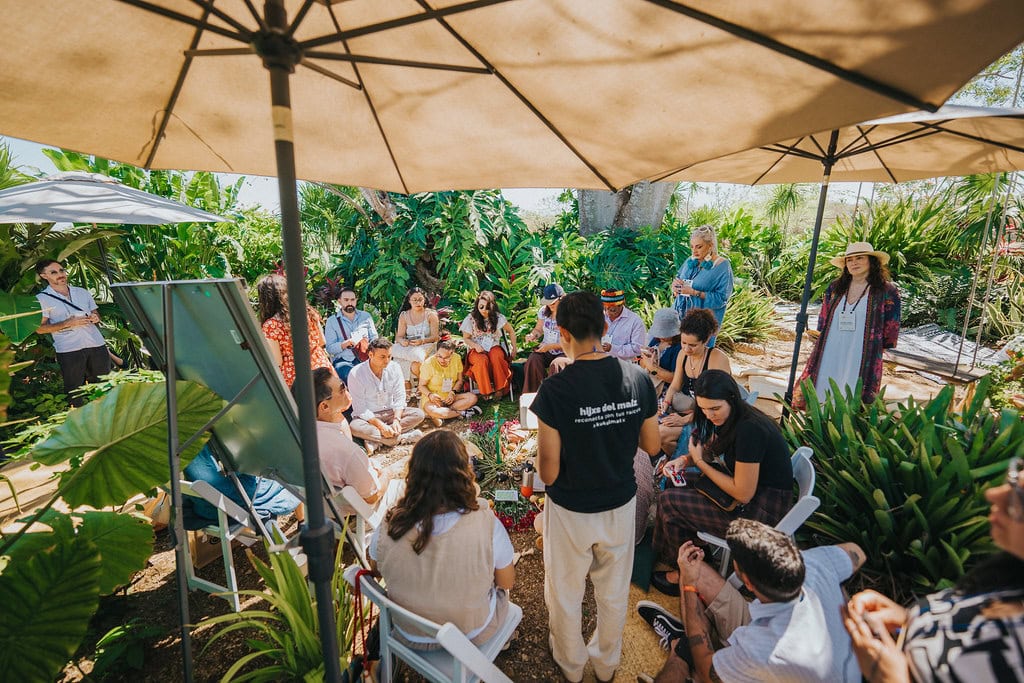
Solís’s relationship with Aspire has evolved alongside his own journey, from participant, to Aspire Community Leader in Mexico City to receiving direct support for Kukulmat’s growth.
“Aspire holds a special place in this story because my relationship with the community has evolved alongside me,” he said.
Aspire’s Social Impact Seed Fund supported Kukulmat’s Cultural Ambassadors Program and the creation of Hijxs del Maíz, while the Community Action Award helped expand the organization’s work in robotics, cultural leadership, and institutional development.
“I experienced firsthand what can happen when an organization chooses to invest in someone’s potential — and then gives that person the trust to create opportunities for others,” he said.
One Opportunity, Many Doors
Looking back, Solís sees a pattern that has become central to how he understands his own journey: one opportunity can become the starting point for many others.
“A scholarship can change a person’s trajectory. A fellowship can enable an idea. An idea can become a pilot. A pilot can earn trust. And eventually, an opportunity originally given to one person can become an opportunity available to an entire community,” he said. “That is the kind of multiplier I hope to continue becoming.”
For Kukulmat, this means strengthening the organization’s work in Chiapas and creating spaces where young people, educators, and communities can imagine and build their own futures. For Solís personally, this recognition is less about a single achievement and more about the people and moments that made the journey possible.
“Being recognized by Forbes México feels meaningful not because it tells me that I have arrived somewhere, but because it gives me a moment to look back with gratitude — and forward with curiosity,” he said. “I think the recognition I value most is not being seen for what I have already built, but being reminded of how much there is still to learn, question, and build with others.”
Francisco Zuriel: Reading the Soil, Rebuilding the Future

Francisco Zuriel, a 2024 Aspire Leaders Program alumnus, was included in Forbes México‘s 30 Under 30 list in 2026 for his work as founder of SoilTronix Robotics; a deeptech agricultural company using mobile robots and AI to bring real-time soil health data to farmers who have never had access to it.
Seeing an Invisible Problem
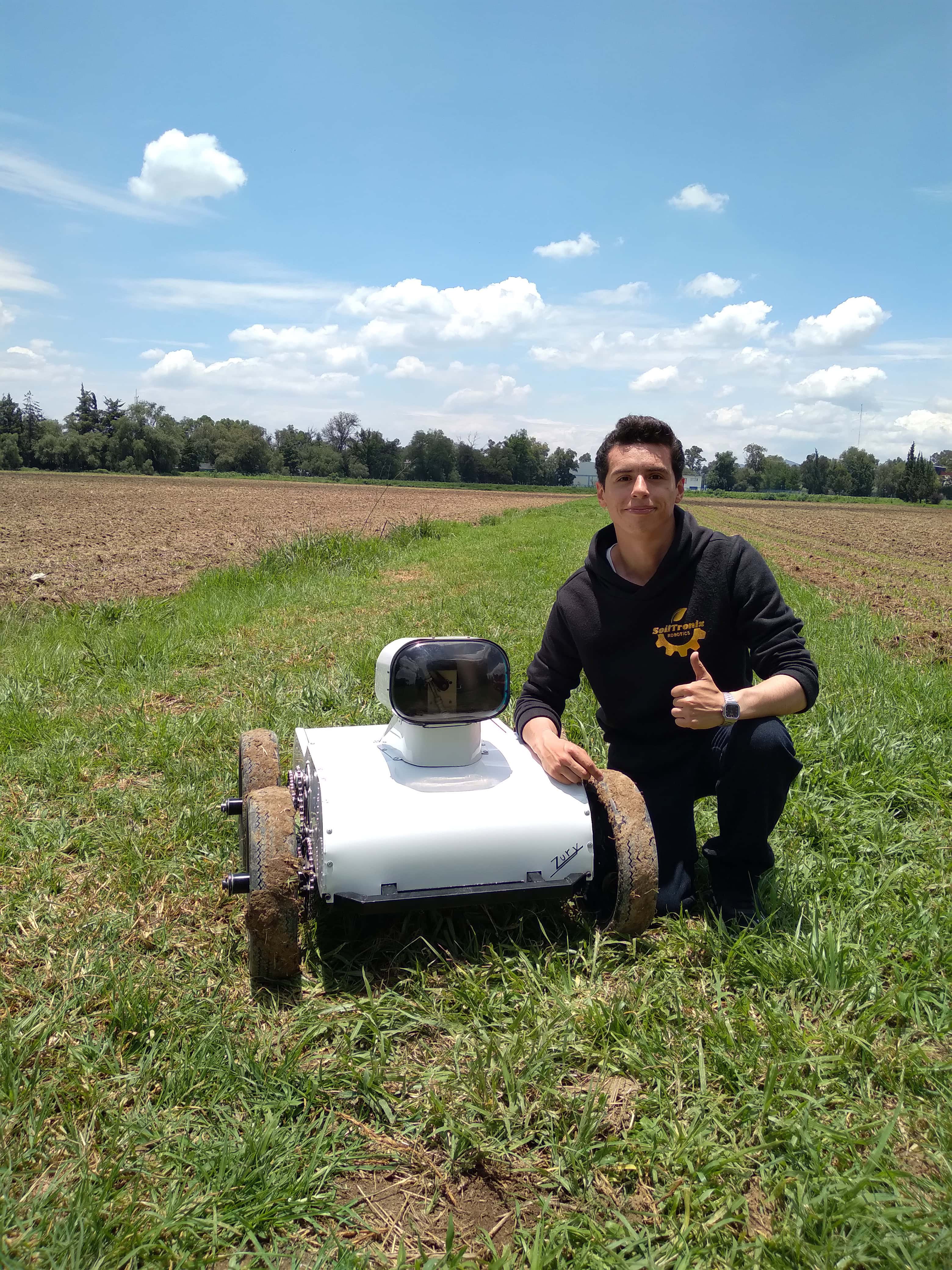
Zuriel’s path to SoilTronix began during his studies at Chapingo, one of the most respected agronomy institutions in Latin America. While visiting agricultural communities across Mexico, he witnessed a pattern.
“Decades of unchecked chemical fertilizer use had quietly degraded the soil, weakening crops and cutting directly into the income of the people who depend on that land to live,” he said.
After some research, he identified the trap producers were caught in: lower yields prompted farmers — particularly those lacking access to reliable soil data — to apply even more fertilizer, which accelerated the degradation of the earth in which crops were planted.
“If the problem was invisible, the solution needed to make it visible — to put real data and real tools directly into the hands of the people working the land,” Zuriel said.
Armed with his convictions and degree in mechatronics engineering, Zuriel founded SoilTronix Robotics. The company’s robots read soil health in real time and turn it into actionable recommendations for farmers through a robot-as-a-service model that removes the need for expensive equipment.
Turning Resistance into Reinvention
One of SoilTronix’s biggest early challenges was resistance to change among established producers, many of whom had farmed the same way their entire lives.
“Rather than fighting that resistance head-on, we shifted our focus toward the next generation of producers: younger farmers who are more open to trying new technologies,” Zuriel said.
He realized that bringing modern tools into the field could help pull young people back into agriculture altogether, reframing farming not as their parents’ way of life, but as a space where technology and tradition work side by side.
An Aspire Lesson That Shapes His Leadership
Zuriel’s time in the Aspire Leaders Program continues to impact the work he does today. He cites a lecture from the leadership course as being one in particular that has stuck with him over time.
“It said something simple but powerful: a true leader is someone who helps others become better,” he said. “That single idea made me stop and think deeply about what leadership actually means, and it’s something I try to put into practice every day in how I lead SoilTronix Robotics.”
Zuriel continues to stay closely connected to the Aspire community in Mexico, regularly showing up at in-person events.
“Every time I do, I walk away with something valuable — the chance to connect with such incredible people is an experience I never take for granted,” he said.
Building the Bridge Between Soil and Technology
To Zuriel, the name SoilTronix carries the mission itself: soil, the oldest and most fundamental resource we have, fused with the technology that can finally help us understand it.
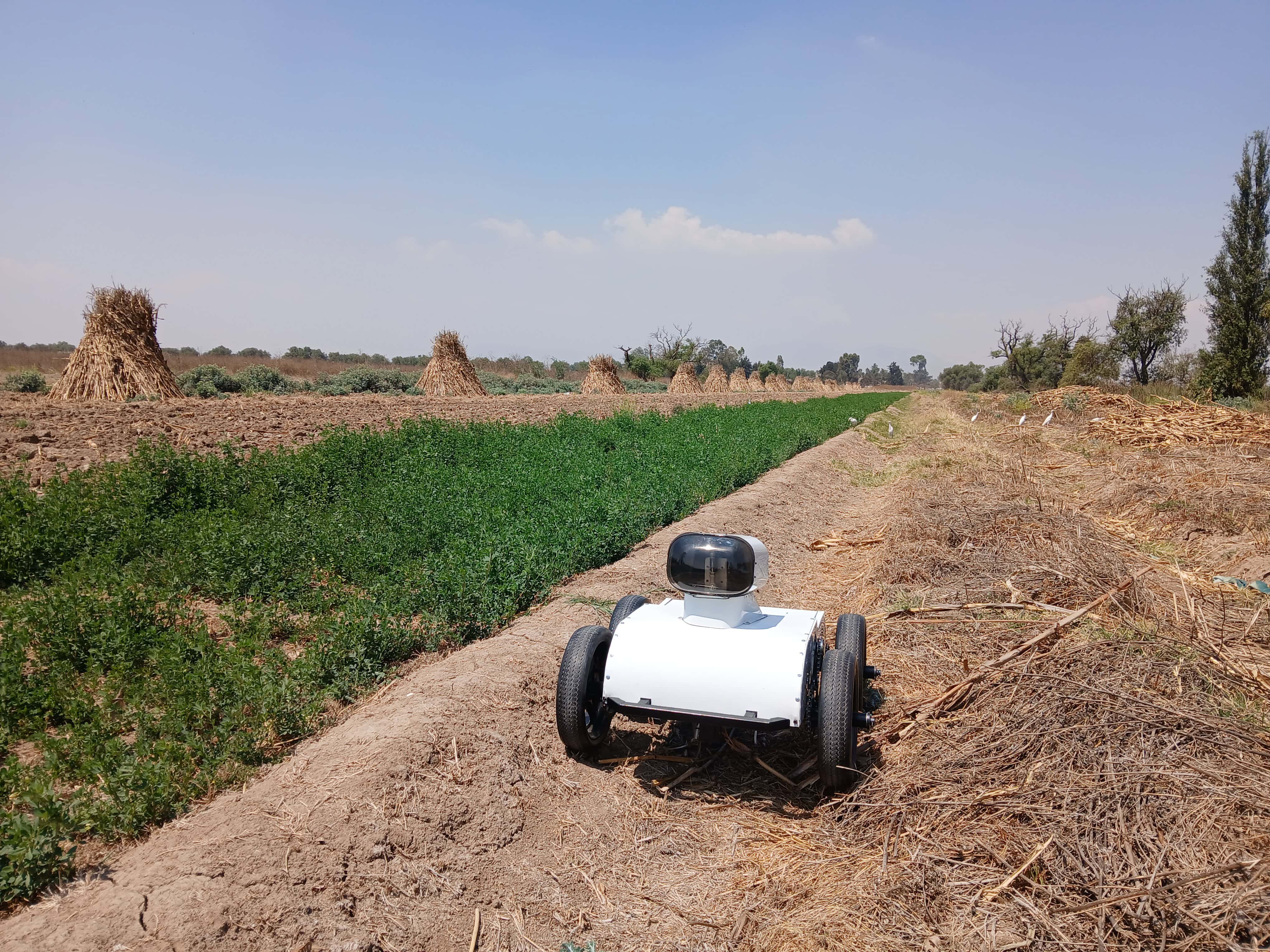
“On the harder days, and there are many in entrepreneurship, what keeps me going is a simple belief: to achieve something different, you have to think and act differently,” he said.
With over $25,000 USD in funding secured from BeVisioneers: The Mercedes-Benz Fellowship and other institutions, Zuriel and his team are now scaling SoilTronix’s robot production to serve more farmers, with the long-term goal of positioning the company as an agricultural innovation leader.
“Being named to Forbes México‘s 30 Under 30 list fills me with joy and pride, and it’s a moment that makes me reflect on how far we’ve come, while reminding me just how much further we still have to go.”