



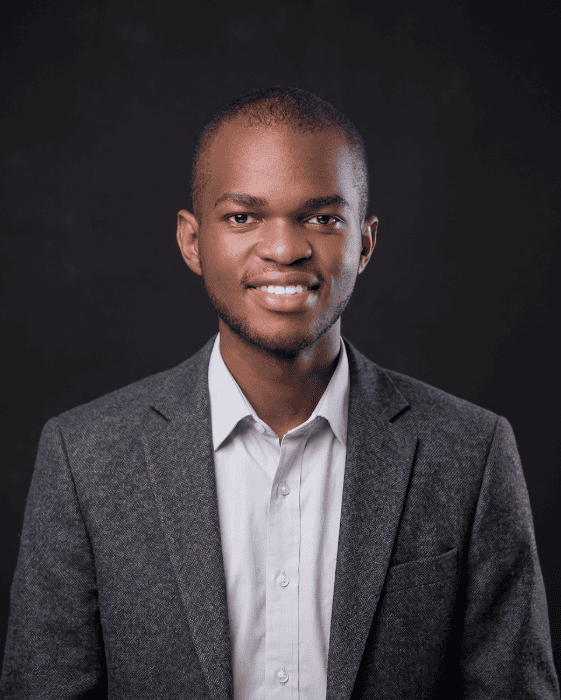
Tamale Elvis, a Ugandan medical doctor and Aspire Leaders Program alumnus, has spent his career moving between the frontlines of care and the research that shapes it — from refugee settlements and public hospitals in Uganda to, most recently, a global diabetes conference stage in Melbourne, Australia. With support from Aspire’s Conference Grant, Tamale traveled to present research born out of a simple, persistent problem he kept seeing in his patients: people starting treatment, then falling out of care.
From the Frontlines to Cambridge
Tamale’s path into medicine and public health research has been shaped by three years of frontline clinical work across refugee settlements, public health systems, and private healthcare settings in Uganda. That experience led him to Cambridge, UK where he recently completed an MPhil in Population Health Sciences. He is now preparing to begin residency in Obstetrics and Gynecology at Aga Khan University in Nairobi.
Rethinking How We Measure Diabetes Risk
Tamale’s recent research has explored whether measures of body composition, such as body fat percentage, fat-free mass, and waist-to-hip ratio — can predict type 2 diabetes risk more accurately than BMI alone. Using data from nearly 69,000 adults in the BELIEVE cohort (a large, ongoing study tracking chronic disease risk factors across urban, rural, and low-income communities in Bangladesh), he found that these additional measures didn’t outperform BMI. Instead, what made the biggest difference was using BMI thresholds calibrated specifically for Asian populations, which flagged a nearly 4.5-fold increase in diabetes risk among people classified as obese under those cutoffs.
“What combination of measures, if any, could still add value beyond BMI in resource-constrained settings?” Tamale asked. “That’s still unresolved.”
His research leaves open questions that he continues to pursue, work shaped in part by his collaboration with Dr. Charlotte Scolding and colleagues at St. Mary’s Hospital Lacor, whose day-to-day work with patients directly informed the project he would go on to present in Melbourne.
A Model Built Around How Patients Actually Live
At Lacor, Tamale and his colleagues kept observing the same pattern: patients with type 2 diabetes and hypertension would begin treatment, disappear from follow-up care, and later return to the emergency department with severe complications. Cost, distance, and low health literacy were often the underlying causes.
Working with Professor Jeremy Schwartz at Yale, Tamale helped build a chatbot-enabled follow-up model that uses WhatsApp, USSD, and automated calls to deliver appointment reminders and diabetes education in local languages between clinic visits, without requiring patients to travel in. It was tested as a mixed-methods implementation study, the model cut loss to follow-up by roughly 55% over 12 months.
“You don’t need expensive infrastructure to keep patients in care,” Tamale claimed. “You need a system built around how they actually live.”
The comment captures the guiding principle behind the project: rather than importing a solution and hoping patients adapt to it, the model was shaped around the tools and habits patients already had.
From Northern Uganda to a Global Stage
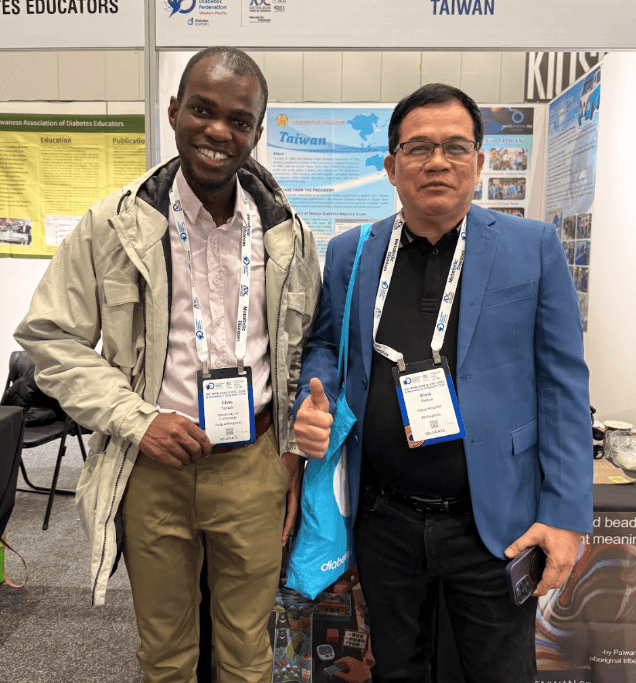
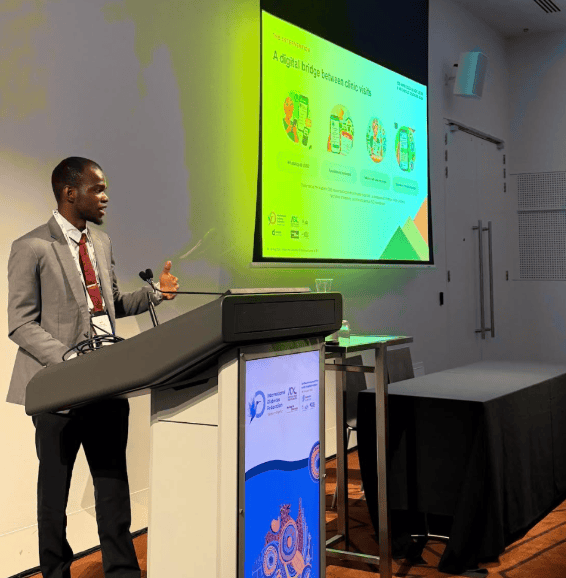
With support from the Aspire’s Conference Grant, Tamale traveled to Melbourne to present his work at IDF-WPR, ADC, and Metabolic Diseases 2026, in the Technology, Digital Health and Clinical Innovation stream.
“Presenting to a room of over 3,000 delegates was one of the most heartwarming experiences of my career,” Tamale pointed out. “It was work that started with a handful of patients in Northern Uganda, now in front of a global audience.”
For Tamale, the moment marked a full-circle experience — watching a solution built for a specific hospital and a specific community resonate on an international stage.
“The grant covered my flight,” he said. “Without it, this trip wouldn’t happen.”
Connections That Will Shape What Comes Next
Beyond presenting his own research, Tamale described some of the conference’s most valuable moments as the conversations he had with other researchers and clinicians. Discussions on gestational diabetes and PCOS stood out in particular, areas he plans to carry directly into his upcoming residency. He also connected with the West Sydney Diabetes team and Monash University, including a conversation with Associate Professor Samantha Hocking on diabetes in lean-phenotype populations across Sub-Saharan Africa and South Asia, as well as insights from Professor Helena Teede AM on prevention and equity in diabetes care.
“It was a reminder that even clinical assumptions need to flex for context,”
Tamale reflected on how the differences between populations and health systems can reshape even well-established clinical guidance. As he begins his OB-GYN residency, Tamale plans to apply these lessons to a specific niche: diabetes and metabolic disease in women’s health.
Advice for Fellow Aspire Alumni
Looking back on the experience, Tamale’s advice to other Aspire alumni considering presenting their own research is rooted in the same philosophy that shaped his work at Lacor.
“Start with the patient,” he said. “Connect with them, understand them, then design. No solution is perfect the first time. But when you design for the context you’re actually working in, you change lives even with the resources you’ve got, not the ones you wish you had.”
It’s a reminder that impactful research doesn’t require perfect conditions but only a willingness to build for the reality in front of you.